Largemouth Bass

Micropterus nigricans (formerly M. salmoides)

The classic beginner's bass — loves weeds, logs and shade.
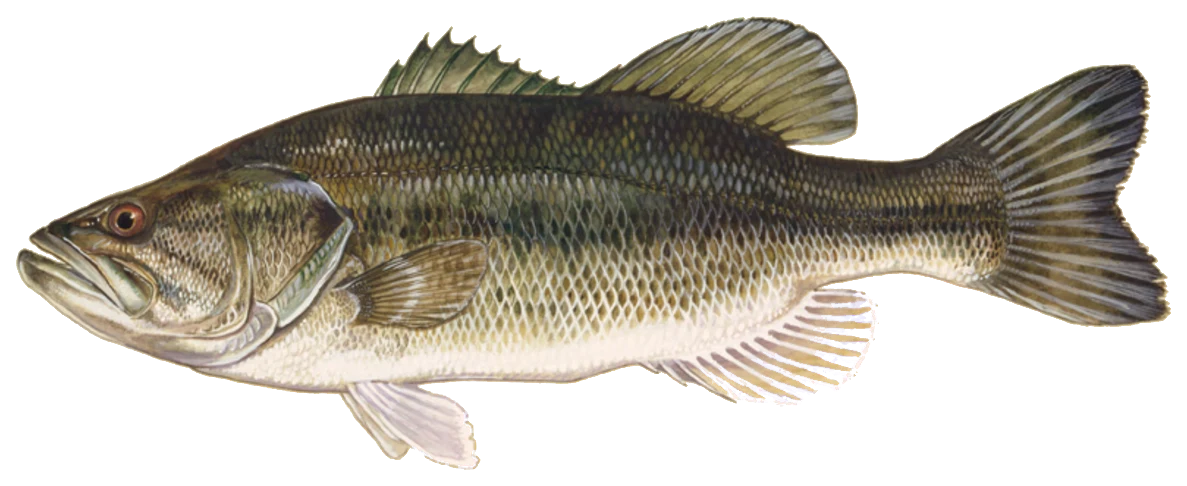
Largemouth Bass
Illustration: Duane Raver / USFWS (public domain)
01 · At a glance

Typical Size & Weight

Length
10–20 in
Weight
½–4½ lb

Source

Active Seasons

Winter
Spring
Summer
Fall
BestCatchablePeak

Year-round · Best: Spring & Fall · Peak: spring spawn

In Missouri, spawning runs mid-April through late May or June; earlier in the South, later up north. MDC TPWD TPWD

02

Habitat & Distribution

Water types

  • Lowland lakes Source
  • Reservoirs and ponds (impoundments of all sizes) Source
  • Permanent pools of streams Source
  • Quiet backwaters of large rivers Source

Structure & cover

  • Weeds, lily pads and other shady vegetation Source
  • Underwater roots, logs and limbs Source
  • Rocky points, banks and channel swings (spring and fall) Source

Prefers warm, moderately clear water with little or no current; most active at dawn and dusk. Source

Basic info

  • Green with dark blotches forming a horizontal stripe along each side; upper jaw reaches past the back of the eye. Source
  • Native to eastern and central North America; now stocked in lakes and ponds across the U.S. Source
03

Feeding Habits

  • Adults eat mostly other fish plus crayfish; young start on zooplankton and insect larvae. Source
  • An ambush hunter: it waits in shady cover like lily pads and vegetation. Source
04

Recommended Tactics & Lures

  • Plastic worms (Texas-rigged, weedless), crankbaits, spinnerbaits, jigs, minnows, night crawlers. Source
  • Fish near shaded vegetation and cover. Source

Seasons and rules vary by state. Always check your state's current fishing regulations on our Fishing by State page. Last checked: Oct 30, 2026.

🏆 Trophy fact: Missouri’s field guide puts the maximum at about 24 inches and 15 pounds. Source