Essential tools are the pieces that are not the rod, the reel, the line, or the hook, but that you still need in order to fish safely and legally: something that cuts line, something that takes a hook out, something that measures a fish, and the license and regulations that tell you whether you can keep it.
The job of this kit is practical. NY DEC puts line clippers on its "What to Bring" list "To cut your fishing line," and adds: "Remember, fishing line is not dental floss. Never cut line with your teeth." Texas Parks and Wildlife Department (TPWD) says to "Use needle-nose pliers, hemostats, or a hook remover to remove the hook and protect your hands," and "Back the hook out the opposite way it went in." NY DEC puts a ruler on the same list "To figure out if your fish is large enough to legally keep," and its New York City saltwater starter guide says size and number limits "are subject to change, so consult the regulations before every trip."
Quick answer (our summary): Pack, at least, a line cutter, pliers or a hook remover (or both), a measuring tool long enough for the fish you might keep, your license in a dry place, and a copy of the current regulations. South Dakota Game, Fish and Parks (GFP) keeps the license "in your tackle box, safe inside a waterproof sleeve," and includes a first-aid kit (disinfectant, Band-Aids, and antibiotic ointment "in a Ziplock bag") and a whistle. If you fish from a boat, South Carolina DNR says to "always wear a life jacket or PFD (personal floatation device)." MassWildlife: "Even along shore, children should wear life jackets as they learn to fish." There is no single official "best" bag, and we do not invent a count of how many of each item to buy.
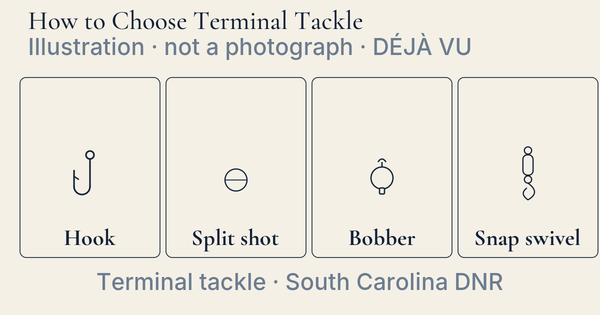
This page teaches you what each of those tools is, how to choose it, why it matters, and what job it does. For the rod, reel, combo and line, see the live guides How to Choose a Fishing Rod, How to Choose a Fishing Reel, How to Choose a Rod and Reel Combo, and How to Choose Fishing Line. For hooks, sinkers, bobbers and simple rigs, see How to Choose Terminal Tackle. Tie knots from Essential Knots; this page does not teach knots. Check license and water rules first: Fishing by State.
Why the kit matters
Our plain-English explanation: the rod puts the bait out, but the tools in the bag are what let you trim a knot, take a hook out of a fish (or out of you), decide whether a fish is legal to keep, and get home with the same fingers you started with.
NY DEC's "What to Bring" list is a practical starter: a buddy, needlenose pliers "Great to have for taking hooks out of fish," a net, a bucket, sunscreen, hand sanitizer, a towel, a flashlight, sunglasses, line clippers, and a regulations guide — plus a ruler "To figure out if your fish is large enough to legally keep." South Carolina DNR's beginner kit illustration includes a stringer "for keeping fish you plan to eat," a measuring tape, and "Rules & Regulations," and it lists nail clippers next to the instruction to "Trim the excess line or tag end." South Dakota GFP's equipment chapter walks through a tackle bag, trays, pliers, nail clippers, a net, a measuring tool, a stringer, a first-aid kit, a whistle, a license in a waterproof sleeve, and a knot-tying card.
Those lists are not identical, and we do not merge them into one official inventory. The sections below take each tool on its own, with the agency that describes it.
A line cutter — what it is, and why you do not use your teeth
The job of a line cutter is to trim tag ends after you tie a knot, and to cut line when you need to. NY DEC names "Line clippers – To cut your fishing line" and is direct about what not to use: "Remember, fishing line is not dental floss. Never cut line with your teeth."
South Dakota GFP: "Nail clippers: These are handy for cutting excess fishing line after tying a knot." South Carolina DNR includes nail clippers in its beginner kit, next to knot-trimming.
How to choose: any cutter that is meant for fishing line — dedicated line clippers, or nail clippers as South Dakota and South Carolina name them — that you will actually keep in the bag and use. Why it matters: cutting line with your teeth is exactly what NY DEC tells you not to do. Line is not floss. A cutter also lets you leave a short tag so a knot can seat, which is the job South Carolina describes when it says to "Trim the excess line or tag end to leave about ¼ inch of" line (the fetched layout cuts the sentence there; South Carolina's "¼ inch" is South Carolina's own trim length, not a universal knot rule). For how to tie the knot itself, use Essential Knots.
Florida Fish and Wildlife Conservation Commission (FWC), on a saltwater fish-handling page, also tells anglers who fish from a pier to "Always be ready with a dehooking tool and line cutters." That is pier-and-saltwater-scoped advice from FWC; the cutter's job is the same, and we do not stretch FWC's pier sentence into a freshwater rule.
Pliers and hook removers — what they are, and how to take a hook out
The job is to get a hook out of a fish — or out of a place you should not put your fingers — quickly and without tearing.
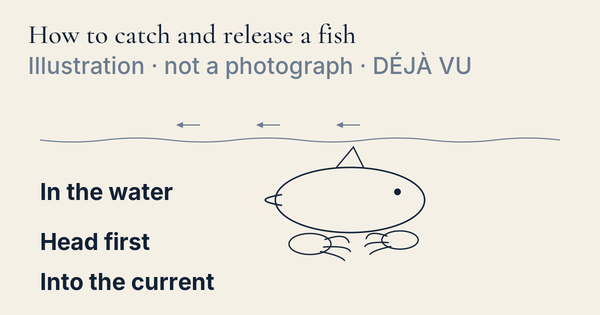
TPWD, Catch & Release Tips: "Use needle-nose pliers, hemostats, or a hook remover to remove the hook and protect your hands." "Back the hook out the opposite way it went in." "Leave fish in the water if you can and use a tool to remove the hook." "Keep your release tools close by."
Minnesota DNR: "Have pliers or forceps ready in case you need a tool to get a tough hook out quickly and gently." "Have pliers ready that work well for taking hooks out."
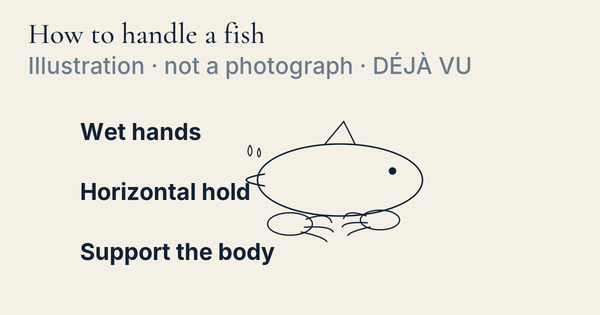
NY DEC, on holding and unhooking: "Needle nose pliers can be a big help when removing the hook. If your fish is deeply hooked, avoid tearing it out as this can harm the fish. Instead, simply cut the line above the hook, and the hook will corrode and dissolve over time." For fish with teeth or spines, NY DEC says "Some fish have spines; some have teeth; a few have both," and, on hook removal, "Instead use forceps or needle nose pliers to remove the hook." "To hold a member of the pike family, grab the fish behind the head. Never grab a fish by the eye sockets or gill covers, because you can hurt it." We quote only what is on the page we fetched; we do not add a "never put your hand in their mouths" sentence that is not in today's snapshot.
FWC (saltwater outreach): "Reduce handling by using a dehooking tool. Dehooking tools allow anglers to quickly release their catch while minimizing injuries and handling time." NOAA Fisheries, in catch-and-release best practices, similarly lists "Release tools such as a dehooker. These minimize handling and make it easier to release fish without removing it from the water."
How to choose: a pair of needle-nose pliers will do the job TPWD, NY DEC, Minnesota DNR, and South Dakota GFP all describe. Hemostats (forceps) or a dedicated hook remover (or dehooker) are the alternatives those agencies name. Why it matters: your fingers are not a tool, and a deeply hooked fish is not a reason to tear the hook out (NY DEC). Back the hook out the way it went in (TPWD). Keep the tool where you can reach it (TPWD; Minnesota DNR). Louisiana Department of Wildlife and Fisheries, on its catfish "Get Out and Fish" list, includes "Long-nose pliers To assist with hook removal." That is confirmation that Louisiana puts long-nose pliers on a catfish tool list, not a separate instruction.

A measuring tool, your license, and the regulations
The job of a measuring tool is to tell you, quickly, whether a fish is long enough to keep — and to do that with as little handling as possible.
NY DEC: a "Ruler – To figure out if your fish is large enough to legally keep." South Carolina DNR's beginner kit includes a "Measuring tape" and "Rules & Regulations." South Dakota GFP includes a measuring tool so you can tell whether "your fish you intend to keep meets length-specific regulations." FWC (saltwater outreach page; we keep the advice general and credit FWC): "Always be aware of current regulations and know how to measure the fish you target. This minimizes handling time when determining whether or not you can keep the fish you caught." MassWildlife's freshwater regulations page describes how Massachusetts itself measures minimum length: "Minimum length is measured in a straight line (not curved over the body) from the tip of the snout to the tip of the tail." That is Massachusetts's measurement method, not a method we attribute to every state. Check how your state says to measure. Fishing by State.
Why it matters: a fish you cannot keep has to go back. Knowing the length, and having the current rule in the bag, is what lets you decide without a long guess on the bank. NY DEC's New York City saltwater starter guide: size and number limits "are subject to change, so consult the regulations before every trip." We treat that "subject to change" sentence as general good practice, and we credit the source as NY DEC's saltwater starter guide.
The license and the regulations card. South Dakota GFP: "It's handy to keep your license in your tackle box, safe inside a waterproof sleeve." South Carolina DNR and NY DEC both put a regulations guide on the beginner list. How to choose: whatever form your state issues — paper, printout, or a phone copy if your state accepts one — in a sleeve or bag that will stay dry, plus a way to read the current size and bag limits for the water you are on. This page does not tell you which license to buy; Fishing by State is the starting point, and California readers can also use our license guide.

A landing net — when you want one, and what kind
The job of a net is to land a fish without dropping it or tearing it up. You do not always need one; TPWD says "If possible, keep the fish from thrashing without using a net. If a net is required, use a rubber-mesh landing net instead of abrasive nylon."
South Dakota GFP: "Choose a net with a long handle for shore fishing. A net with a collapsible handle will store easily. Rubber mesh nets are durable and hooks or spines will not get tangled in rubber mesh like they will in nylon mesh."
NOAA Fisheries: "Wet, soft knotless mesh or a rubber landing net. These cause less damage to a fish's eyes, fins, scales, and protective mucus coating." FWC (saltwater outreach): "A knotless, rubber-coated landing net is ideal when handling a fish since it supports the fish's body weight. Remember, fish swim horizontally!"
How to choose: if you want a net, agencies that name a material prefer rubber or knotless rubber-coated mesh over abrasive nylon (TPWD, South Dakota GFP, NOAA, FWC). South Dakota's shore-fishing advice is a long handle, or a collapsible handle for storage. Wet the net (NOAA). Why it matters: the net is for support and control, and for less damage to eyes, fins, scales, and slime (NOAA). FWC's "supports the fish's body weight" is FWC's reason, credited to FWC, on a saltwater-oriented page.
NY DEC's "What to Bring" list includes a net "Just in case you catch the big one." That is NY DEC's phrasing, not a size claim we will turn into a number.

Organizing the bag, and keeping it dry
The job of the bag or box is to keep the tools and the tackle where you can find them, and to keep them from rusting.
South Dakota GFP: "Your boxes should have enough trays to organize your lures so they can be stored separately and won't tangle together. Plan to buy a tackle bag that is slightly larger than what you need right now. A little extra space allows you to carry non-tackle items (like your cell phone and" — the fetched layout cuts the sentence there; we keep only the complete clause about a slightly larger bag and trays so lures "won't tangle together."
TPWD, Fishing Gear Maintenance and Repair: "Hooks, swivels, lures, pliers and clippers can rust if stored while damp. Leave tackle boxes open until the contents are dry." (TPWD also mentions "silicon packs" to help absorb moisture — TPWD's spelling.) For saltwater, TPWD describes a more "disciplined and detailed regimen" because of corrosion, including a gentle rinse after every use: "The object is to wash off the saltwater, so it is best to avoid submerging the equipment." That saltwater regimen is TPWD's saltwater advice; we do not present it as a freshwater rule.
Why it matters: a rusted pair of pliers is no longer a hook remover, and a tangled box costs you time when a fish is on. Dry the box open (TPWD). Give the bag a little extra room (South Dakota GFP).

If you plan to keep a fish — and if you plan to let it go
South Carolina DNR lists a "Stringer for keeping fish you plan to eat," and, in the same beginner guide, a cooler or bucket among the things anglers use. South Dakota GFP: "A stringer is useful if you want to keep the fish you've caught while you continue fishing" (reconstructed from a two-column layout in the FISH book; the complete thought on the page is that a stringer is for fish you are keeping as you go on fishing). MassWildlife, on its stocked-trout page: "Bring a cooler with ice or use a stringer (improvised or store-bought)."
Minnesota DNR, for fish you plan to release: "Do not place fish you plan to release on a stringer or in a live well."
Our summary: a stringer or a cooler is for fish you are keeping, as South Carolina, South Dakota, and MassWildlife describe. It is not for fish you intend to let go (Minnesota DNR). Those are different jobs. We do not describe a stringer as a way to "keep fish alive" — that phrasing was not in today's South Dakota extract.
Safety items agencies name
These are not tackle, but they are in the same bag on more than one agency list.
- First aid. South Dakota GFP: "First aid: Disinfectant, a few Band-Aids and antibiotic ointment in a Ziplock bag are good to have on hand when dealing with sharp objects (hooks and fish spines)." MassWildlife, for kids: "Remember to pack a small first aid kit."
- Sun and insects. South Carolina DNR: "Wear sunglasses, sunscreen, bug spray and other protection from the natural elements." NY DEC lists sunscreen, bug spray, and polarized sunglasses ("not only help protect your eyes but they also help you see into the water"). MassWildlife: "Snacks, drinks, sunscreen, and bug spray keep kids happy," and "Polarized sunglasses help protect young eyes from the sun and from tree branches or hooks."
- A whistle. South Dakota GFP: "A whistle can be heard from greater distances than a person's cry for help."
- A life jacket. South Carolina DNR: "Be very careful around water and make sure you have a fishing buddy with you. If fishing from a boat, always wear a life jacket or PFD (personal floatation device)." (South Carolina's spelling is "floatation.") MassWildlife: "Even along shore, children should wear life jackets as they learn to fish." Those two sentences have different scopes — a boat (South Carolina) and children along shore (MassWildlife) — and we keep them separate.
- A buddy. NY DEC: "Buddy up – Fishing with family and friends is a lot of fun and safer too." South Carolina DNR, as quoted above, also wants a fishing buddy.
Why it matters: hooks are sharp, the sun is not optional, and a bank or a boat is still water. The MassWildlife shore-jacket sentence is about children learning to fish, not a general adult-shore rule we will invent.
What belongs in every bag (our summary)
This is our plain-English kit, built from the agency lists above. It is not an official inventory, and it does not tell you how many of each item to buy.
- A line cutter — clippers or nail clippers. Never your teeth (NY DEC).
- Needle-nose pliers, forceps, or a hook remover — to back a hook out and to keep your hands off a toothy or deeply hooked fish (TPWD, NY DEC, Minnesota DNR).
- A measuring tool — a ruler or tape "large enough to legally keep" the fish you might take (NY DEC's phrasing), used the way your state says to measure.
- Your license, in a waterproof sleeve, and current regulations for the water you are on (South Dakota GFP; NY DEC; South Carolina DNR). Consult them before every trip (NY DEC, saltwater starter guide).
- A small first-aid kit (South Dakota GFP; MassWildlife).
- Sun and insect protection (South Carolina DNR; NY DEC; MassWildlife).
- Optional, by job: a rubber or knotless landing net (TPWD, South Dakota, NOAA, FWC); a long handle for shore (South Dakota); a stringer or cooler only for fish you plan to keep (South Carolina, South Dakota, MassWildlife — and not for fish you plan to release, Minnesota DNR); a whistle (South Dakota); a PFD on a boat (South Carolina DNR); a life jacket for children even along shore (MassWildlife); a fishing buddy (NY DEC, South Carolina DNR).
Dry the box open when you get home so pliers and clippers do not rust (TPWD).
Common mistakes
- Cutting line with your teeth. NY DEC: "Never cut line with your teeth." "Fishing line is not dental floss."
- Fingers in place of pliers. TPWD, NY DEC, and Minnesota DNR all want a tool ready. For members of the pike family, NY DEC says to grab the fish behind the head, and never by the eye sockets or gill covers.
- Tearing out a deep hook. NY DEC: cut the line instead.
- Guessing at length, or using last year's rules. Have a measuring tool (NY DEC, South Carolina DNR, South Dakota GFP, FWC) and consult current regulations "before every trip" (NY DEC).
- A license that went through the wash. South Dakota GFP's sleeve is there for a reason.
- Storing pliers and clippers in a damp box. They rust (TPWD). Leave the box open to dry.
- A nylon-mesh net when agencies that name a material prefer rubber. TPWD, South Dakota GFP, NOAA, and FWC all describe rubber or knotless mesh as the kinder choice.
- A stringer for a fish you plan to release. Minnesota DNR: do not.
Common questions
What tools do I actually need for a first trip? Our summary, from the agency lists on this page: a line cutter, pliers or a hook remover, a measuring tool, your license and the current regulations, and a small first-aid kit, plus sun protection. A net, a whistle, a stringer or cooler (only if you will keep fish), and a PFD are job-specific. There is no official single bag, and we do not invent quantities.
Can I cut fishing line with my teeth? No. NY DEC: "Remember, fishing line is not dental floss. Never cut line with your teeth." South Dakota GFP and South Carolina DNR name nail clippers or line clippers for the job.
How do I take a hook out? TPWD: "Use needle-nose pliers, hemostats, or a hook remover to remove the hook and protect your hands." "Back the hook out the opposite way it went in." If the fish is deeply hooked, NY DEC says not to tear the hook out: "simply cut the line above the hook." Minnesota DNR: have pliers or forceps ready. Leave the fish in the water if you can (TPWD).
How should I measure a fish? Have a ruler or tape with you (NY DEC, South Carolina DNR, South Dakota GFP). FWC: knowing how to measure "minimizes handling time." The exact method is your state's. MassWildlife, for Massachusetts, says minimum length is "measured in a straight line (not curved over the body) from the tip of the snout to the tip of the tail." Do not assume that wording is every state's method. Fishing by State.
Where should I keep my license? South Dakota GFP: "It's handy to keep your license in your tackle box, safe inside a waterproof sleeve." Bring the current regulations too (NY DEC, South Carolina DNR), and "consult the regulations before every trip" (NY DEC).
Do I need a landing net? Not always. TPWD: use a net if you need one, and then "use a rubber-mesh landing net instead of abrasive nylon." South Dakota GFP prefers rubber mesh over nylon for tangling, and a long handle for shore fishing. NOAA and FWC describe wet, knotless or rubber nets as causing less damage and supporting the fish's body.
Should children wear a life jacket on the bank? MassWildlife: "Even along shore, children should wear life jackets as they learn to fish." South Carolina DNR's "always wear a life jacket or PFD" sentence is about fishing from a boat. We do not turn either sentence into a rule it does not state.
Keep going
- Choose the rod: How to Choose a Fishing Rod.
- Choose the reel: How to Choose a Fishing Reel.
- Choose a matched set: How to Choose a Rod and Reel Combo.
- Choose the line: How to Choose Fishing Line.
- Choose hooks, sinkers, bobbers and simple rigs: How to Choose Terminal Tackle.
- Tie the line on: Essential Knots.
- A single matched starter setup: Your First Rod, Reel & Line.
- Permission and rules: Fishing by State. California readers can also use our license guide.
- Back to Start Here or the Guides hub.
Pack the cutter, the pliers, the measuring tool, and the license before you go, then record the trip in the Catch Log. Our free Water & Light chart helps you choose when and where to go next. The DÉJÀ VU™ First Cast Kit is on the way. Join the waitlist to hear first.
Always check current regulations for your state and water. Rules change. Fishing by State. Source URLs fetched or WebFetched November 13, 2026 PT.
Sources
- NY DEC, I FISH NY Beginners' Guide to Freshwater Fishing, Ch. 2 — https://extapps.dec.ny.gov/docs/fish_marine_pdf/gsfishing2.pdf
- NY DEC, Getting Started in Saltwater Fishing — https://extapps.dec.ny.gov/docs/fish_marine_pdf/nycswgetstar.pdf
- South Dakota GFP, FISH South Dakota Book Part One, Ch. 2 Equipment — https://gfp.sd.gov/UserDocs/nav/FISHSouthDakotaBook_PartOne_(1).pdf
- South Carolina DNR, A Beginner's Guide to Fishing — https://www.dnr.sc.gov/fish/pdf/fishingguide1.pdf
- Texas Parks and Wildlife, Catch & Release Tips — https://tpwd.texas.gov/regulations/outdoor-annual/fishing/catch-release-tips
- Texas Parks and Wildlife, Fishing Gear Maintenance and Repair — https://tpwd.texas.gov/education/angler-education/fishing-gear-maintenance-and-repair.pdf
- NOAA Fisheries, Catch and Release Fishing Best Practices — https://www.fisheries.noaa.gov/national/resources-fishing/catch-and-release-fishing-best-practices
- Florida Fish and Wildlife Conservation Commission, Fish Handling — https://myfwc.com/fishing/saltwater/outreach/fish-handling/
- Minnesota DNR, Catch-and-Release — https://www.dnr.state.mn.us/fish/catchandrelease.html
- MassWildlife, 10 Tips for Taking Kids Fishing — https://www.mass.gov/info-details/10-tips-for-taking-kids-fishing
- MassWildlife, Freshwater fishing regulations — https://www.mass.gov/info-details/freshwater-fishing-regulations
- MassWildlife, Stocked trout — https://www.mass.gov/info-details/stocked-trout-how-to-catch-prepare-and-cook
- Louisiana Department of Wildlife and Fisheries, Get Out and Fish — https://www.wlf.louisiana.gov/page/get-out-and-fish